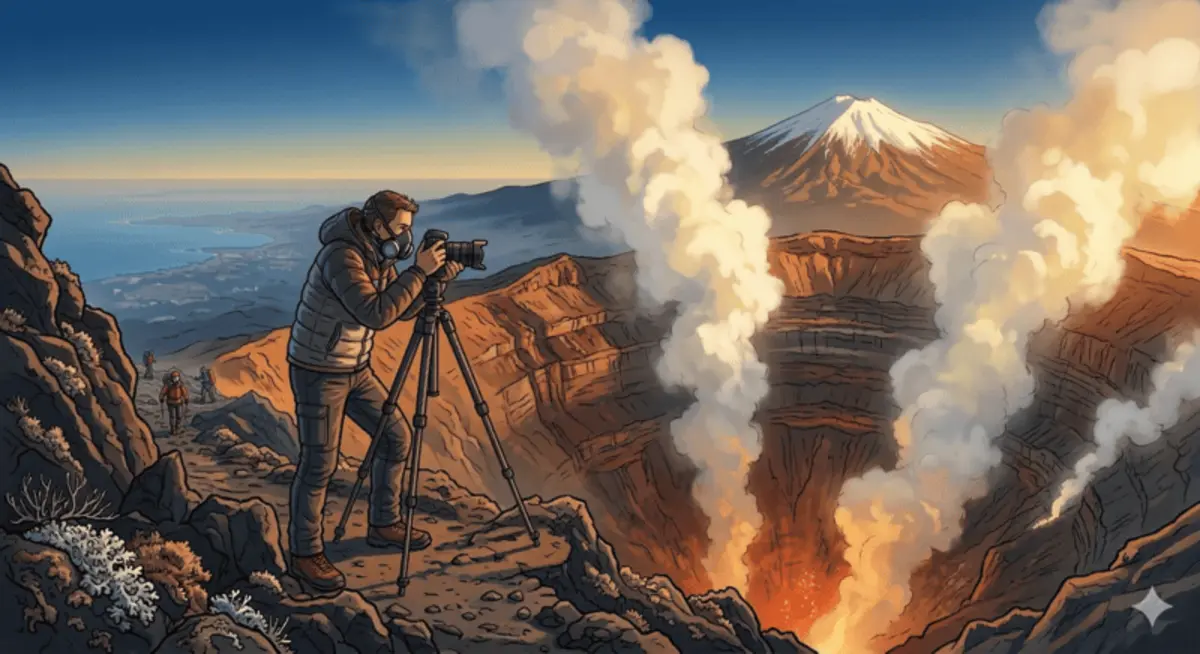
Mount Etna Photography: Best Spots, Light & Practical Tips
Where and when to photograph Mount Etna for the best results — from summit craters to lava flows, sunset light to eruption shots.
Table of Contents
Mount Etna is one of the most photogenic volcanoes on Earth — steaming craters, black lava deserts, and the Mediterranean Sea as a backdrop. Whether you're shooting with a professional camera or a smartphone, the right timing and location make all the difference. Here's what 25 years of guiding on Etna have taught me about getting the best shots.
Best Light Conditions
The golden hour on Etna is exceptional. At 3,000+ meters, with no buildings or trees to block the horizon, sunrise and sunset paint the volcanic landscape in warm amber tones. The best light for photography is typically between 6:00-8:00 AM and 5:00-7:30 PM (summer hours). Morning light is cleaner — less haze, sharper contrasts. Sunset light is warmer and more dramatic, especially when volcanic gas catches the colour.
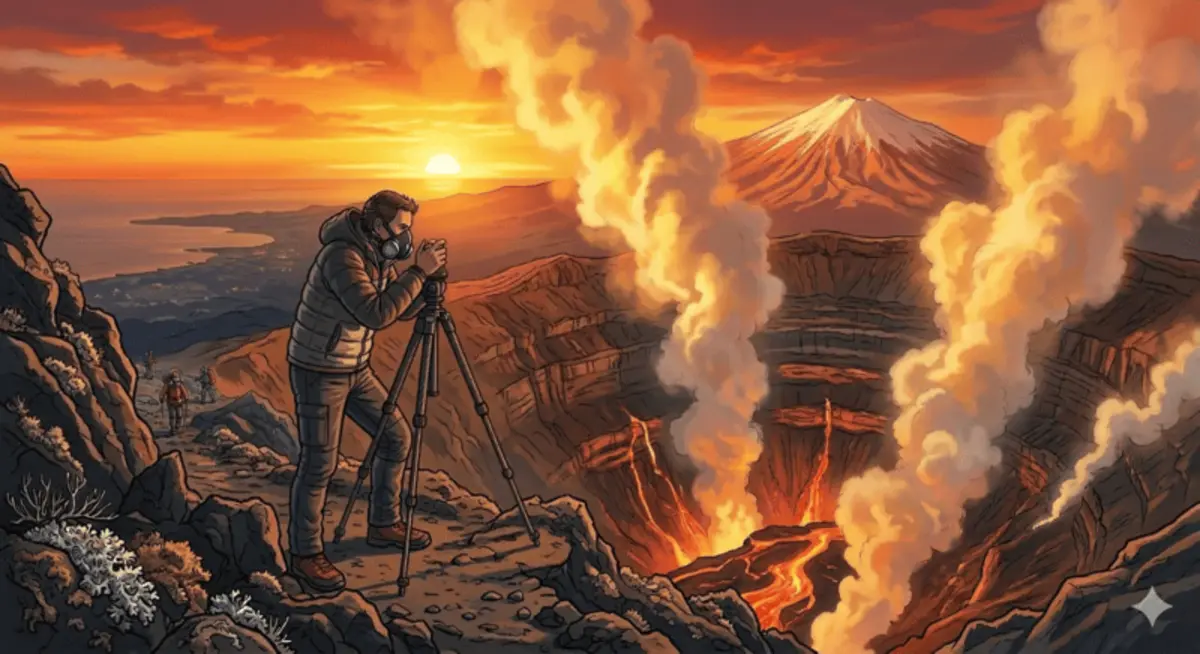
Overcast days are not wasted. Clouds diffuse harsh shadows and make the textures of lava fields pop. Low cloud cover that sits below the summit creates spectacular "sea of clouds" shots, with Etna's peak emerging like an island. Winter offers the best contrast: black lava against white snow under clear blue skies.
Top Photography Spots on Etna
Summit craters (3,300 m): The most dramatic shots — fumaroles rising against blue sky, crater rims with the Ionian Sea 3 km below. Available only with a licensed guide. Early morning visits offer the best visibility before afternoon clouds build.
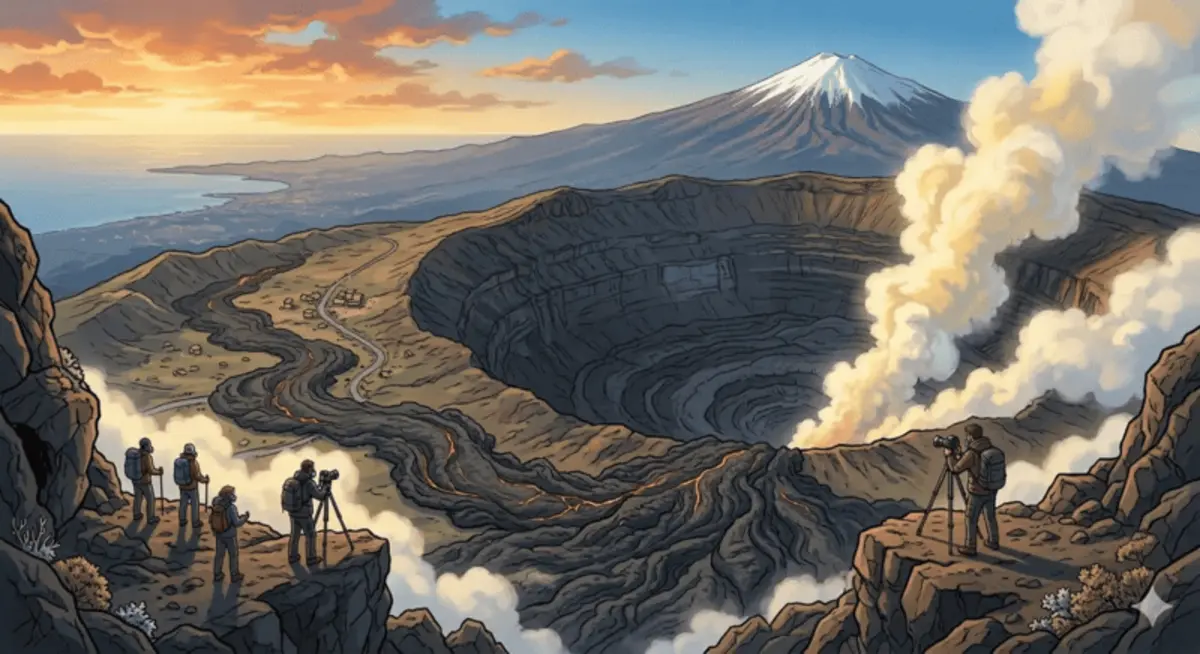
Torre del Filosofo (2,920 m): A panoramic viewpoint between the 4x4 drop-off and the summit. Perfect for wide-angle shots showing the scale of the volcano. The ruins of the old observatory add foreground interest.
Silvestri Craters (1,900 m): Accessible without a guide. The cone shapes and coloured minerals create strong compositions. Best in the last hour before sunset when side-light emphasises the crater textures.
Valle del Bove: A massive collapse valley on the east side. Visible from several points above 2,500 meters, it's over 5 km wide and 1 km deep. The scale is best captured at dawn when shadows define the cliff walls.
North side — Piano Provenzana: The 2002 lava flows buried an entire ski resort. The skeletal remains of buildings and chairlifts emerging from black lava make powerful compositions about nature's force.
Gear Recommendations
For serious photography, bring a wide-angle lens (16-35mm equivalent) for landscapes and a telephoto (70-200mm) for crater detail and eruption shots from safe distances. A polarising filter cuts haze and deepens sky colour — essential at altitude. A sturdy tripod is valuable for sunrise/sunset sessions, but on summit treks the weight trade-off is real: many photographers use a lightweight travel tripod or monopod instead.
Bring spare batteries — cold temperatures at altitude drain them 30-50% faster. Keep batteries in an inside pocket close to your body until needed. Memory cards should have more capacity than you think: volcanic landscapes invite hundreds of shots, and video of active fumaroles or lava is irresistible.
Photographing Volcanic Activity
If Etna is in a period of strombolian activity (explosive eruptions from the summit craters), the Sunset & Night Trek offers the best photographic opportunities. Incandescent lava against a dark sky is visible from 2,500-2,900 meters during evening treks. Settings: manual mode, ISO 800-1600, f/4-5.6, shutter speed 1/15-1/60 second depending on the intensity.
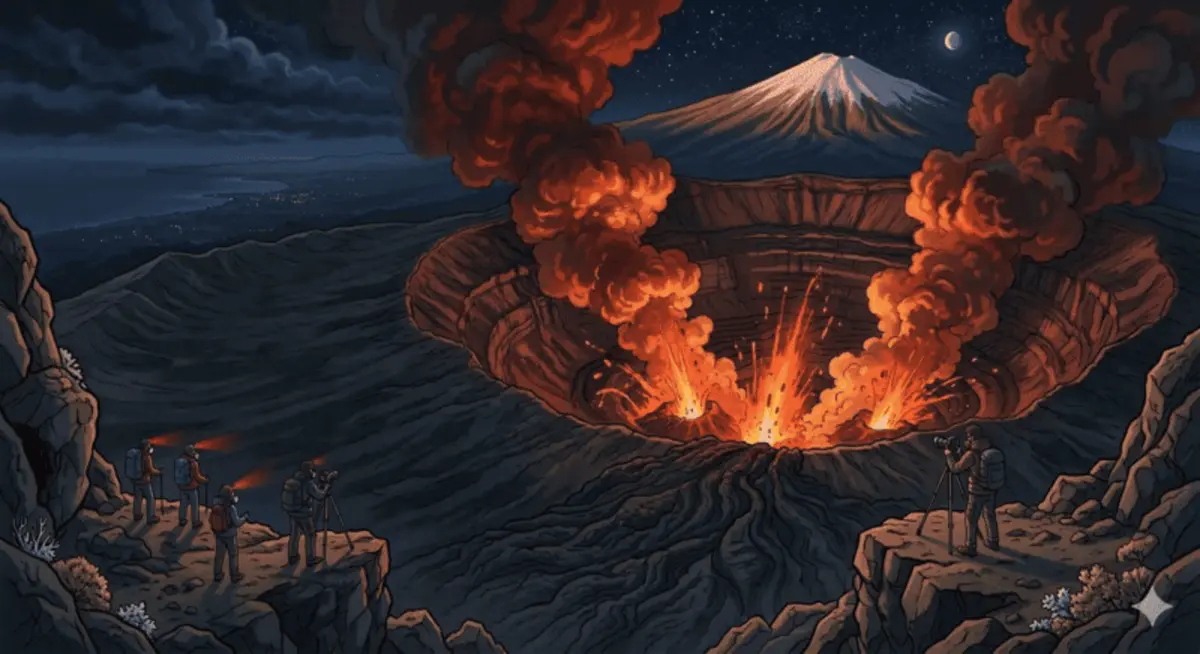
Lava flows are rarer but occasionally reach accessible areas. Your guide knows the active flow fronts and can position you safely for photographs. Slow lava flows photograph best at dusk, when the glow contrasts with the dimming sky. Use exposure bracketing — the contrast between glowing lava and dark surroundings is extreme.
Smartphone Tips
Modern smartphones do remarkably well on Etna. Use HDR mode for high-contrast scenes (bright sky, dark lava). Night mode captures volcanic glow effectively — hold the phone steady against a rock or backpack for sharper results. Switch to the wide-angle lens for crater interiors and panoramic views. Avoid digital zoom beyond 2x; crop later for better quality.
The biggest smartphone challenge on Etna is glare. The bright volcanic terrain and intense sunlight can make screens unreadable. A peaked hand shade helps, or compose shots using the volume button as shutter release while holding the phone at a viewing angle that reduces glare.
Protecting Your Equipment
Volcanic dust is the enemy of camera equipment. Fine ash particles are abrasive and can damage sensor elements, lens coatings, and moving parts. Keep cameras in a sealed bag when not shooting. Change lenses only when sheltered from wind — or better yet, bring two camera bodies to avoid lens changes entirely.
Volcanic gas (SO₂) can tarnish metal components over time but is not a concern for single-day exposure. Rain and moisture at altitude are more immediate threats. A simple rain cover or plastic bag with a hole cut for the lens protects gear during sudden weather changes, which are common above 2,500 meters.
Before You Book: Quick Planning Checklist
- Check updated weather and volcanic activity conditions for your travel dates.
- Confirm meeting point, start time, and transfer arrangements.
- Request availability early for your preferred date and route.
- Read local safety guidance before excursions.