Flora and Fauna of Mount Etna: A Living Volcanic Ecosystem
Discover the surprising biodiversity of Mount Etna — from endemic plants growing on lava to rare birds and the famous Etna birch.
Table of Contents
Most people think of Mount Etna as a barren volcanic wasteland. The reality is different: Etna supports one of the most diverse ecosystems in the Mediterranean, with over 1,500 plant species — including several found nowhere else on Earth. The volcano's 3,400-meter altitude span creates distinct vegetation zones, from subtropical citrus groves at the base to pioneer mosses clinging to fresh lava near the summit.
Vegetation Zones: From Coast to Crater
Etna's slopes function like a compressed cross-section of European vegetation. Between sea level and 500 meters, Mediterranean maquis dominates — prickly pear, olive trees, and the citrus orchards that produce Sicily's famous blood oranges. The mineral-rich volcanic soil makes this land exceptionally fertile.
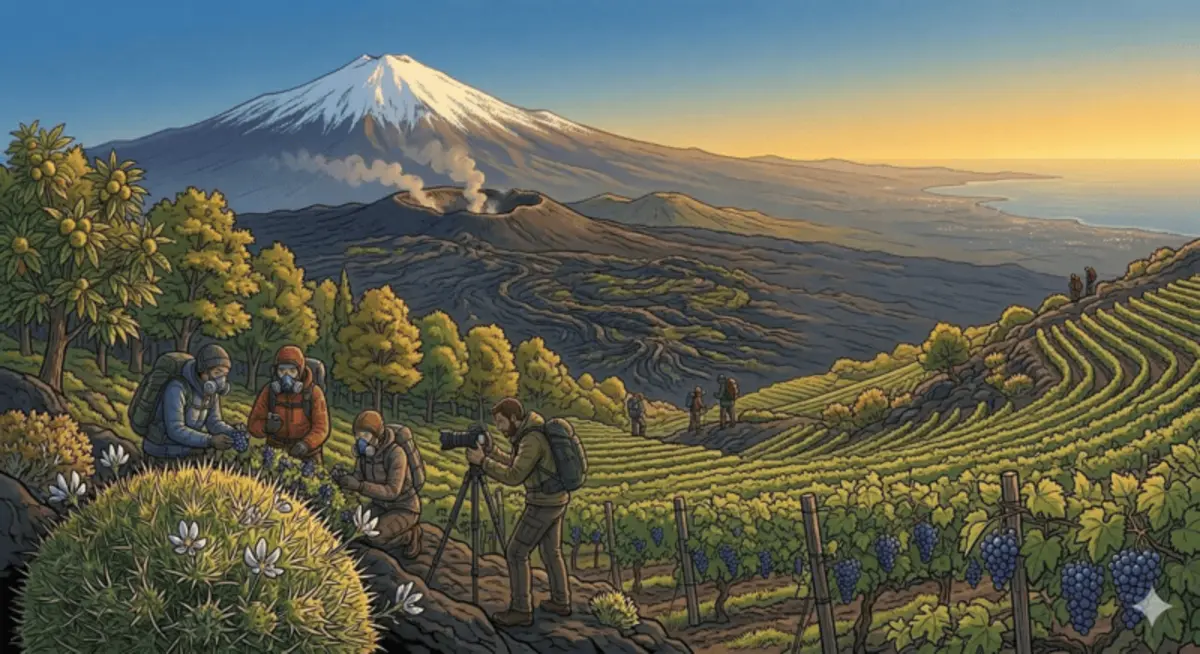
From 500 to 1,500 meters, deciduous forests take over: chestnut, oak, and hazelnut trees cover the slopes. This zone produces excellent wine grapes (Nerello Mascalese, Carricante) and the prized Bronte pistachios from the western flanks. Between 1,500 and 2,000 meters, Etna's signature birch and pine forests create a cooler, montane environment. Above 2,000 meters, only specialised alpine and volcanic plants survive — thorny cushion shrubs, lichens, and mosses adapted to extreme cold, wind, and volcanic gas.
Endemic Plants Found Nowhere Else
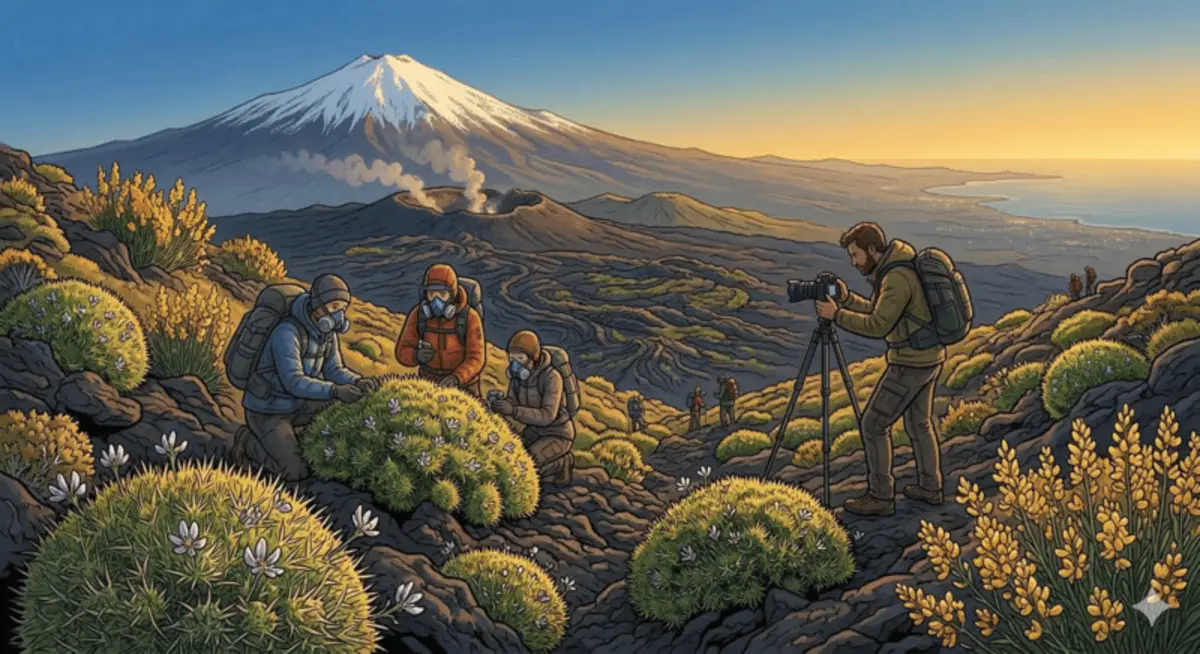
Etna hosts at least 12 endemic plant species — organisms that evolved exclusively on this volcano and exist nowhere else. The most emblematic is Astragalus siculus (spino santo dell'Etna), a thorny cushion plant that forms dense, low mounds on exposed lava between 1,800 and 3,000 meters. It's a pioneer species, often the first plant to colonise bare lava flows.
Other endemics include Senecio aetnensis, a yellow-flowered daisy that blooms on the volcanic desert above 2,500 meters, and Rumex aetnensis, a sorrel adapted to mineral-rich volcanic soils. Viola aetnensis, a tiny violet, hides in the crevices of old lava flows. These species have evolved remarkable adaptations: deep root systems to access water in porous lava, waxy leaves to resist wind desiccation, and tolerance to sulphur dioxide from volcanic vents.
The Etna Birch: A Survivor
Betula aetnensis, the Etna birch, is perhaps the volcano's most iconic tree. This birch species is endemic to Etna and grows between 1,400 and 2,100 meters — the highest tree line on any Mediterranean volcano. During the last Ice Age, birch forests covered much of southern Europe. As the climate warmed, they retreated northward. On Etna, the altitude provided a cool refuge, and the birch population became genetically isolated.
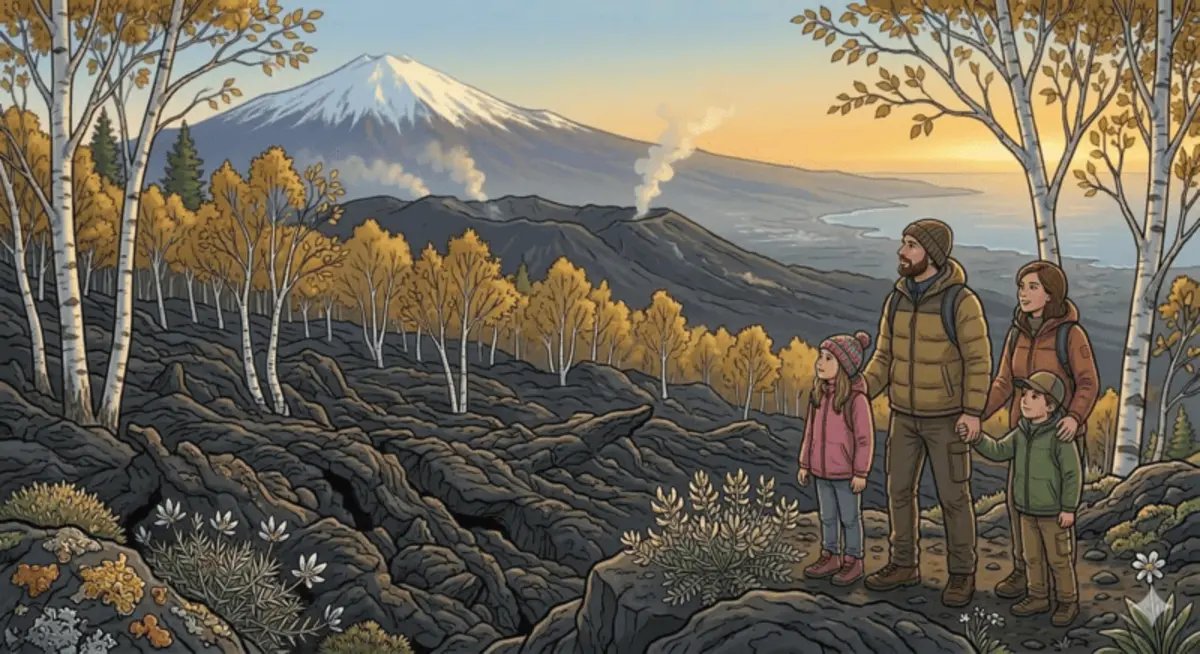
Today, Etna birches are instantly recognisable by their white bark and graceful form against black lava backgrounds — one of the volcano's most photographed subjects. The species is considered vulnerable, with only a few thousand mature trees remaining in scattered groves on the north and east slopes. The Etna Park authority has fenced several groves to protect them from grazing and human disturbance.
Wildlife on the Volcano
Etna's fauna is less visible than its flora but equally interesting. The volcano's forests shelter wildcats (Felis silvestris), foxes, porcupines, and the Sicilian dormouse. Reptiles include the endemic Sicilian wall lizard (Podarcis waglerianus) and the European asp viper, found in rocky areas on the lower slopes.
Birdlife is rich, particularly raptors: peregrine falcons nest on the lava cliffs, golden eagles are occasionally spotted above 2,000 meters, and the common buzzard hunts across all altitude zones. The volcano's east face provides migration corridors for birds crossing the Mediterranean. In spring, look for hoopoes, bee-eaters, and rollers in the chestnut groves between 500 and 1,000 meters.
Pioneer Plants: Life on Fresh Lava
One of the most fascinating processes on Etna is how life recolonises fresh lava. Within 5-10 years of an eruption, the first organisms appear: lichens (particularly Stereocaulon vesuvianum) that break down rock surfaces through chemical weathering. Mosses follow within 20-30 years, creating thin soil pockets. Astragalus and other pioneer plants establish roots within 50 years.
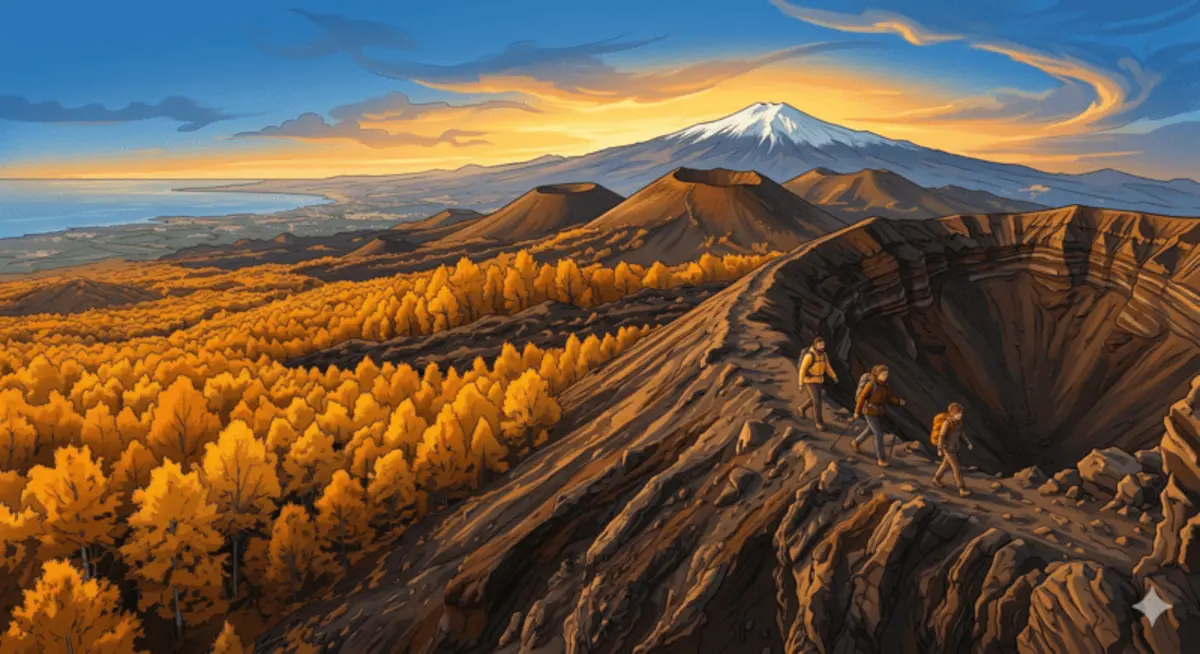
The 2002 lava flows at Piano Provenzana offer a living laboratory of this succession process. Twenty-four years later, lichen patches cover much of the lava surface, and the first Astragalus plants are establishing footholds. In contrast, the 1892 Silvestri Craters at Rifugio Sapienza show a more mature colonisation, with small shrubs and grasses growing between the cones. Walking through these different-aged lava flows with a guide gives you a time-lapse view of ecological recovery.
Conservation and the Etna Park
The Parco dell'Etna, established in 1987, protects 59,000 hectares of volcanic landscape and is a UNESCO World Heritage Site since 2013. The park is divided into zones: Zone A (integral reserve) covers the summit craters and most sensitive areas where access requires a licensed guide. Zone B permits hiking on marked trails. Zones C and D encompass agricultural land and villages on the lower slopes.
As guides, we play a direct role in conservation. We teach visitors to stay on marked paths to avoid trampling pioneer plants, to carry out all waste, and to respect the fragile balance between volcanic destruction and biological recovery. Each eruption destroys habitat — and each recovery demonstrates nature's extraordinary resilience. Understanding this cycle is one of the most rewarding aspects of an Etna trek.
Before You Book: Quick Planning Checklist
- Check updated weather and volcanic activity conditions for your travel dates.
- Confirm meeting point, start time, and transfer arrangements.
- Request availability early for your preferred date and route.
- Read local safety guidance before excursions.