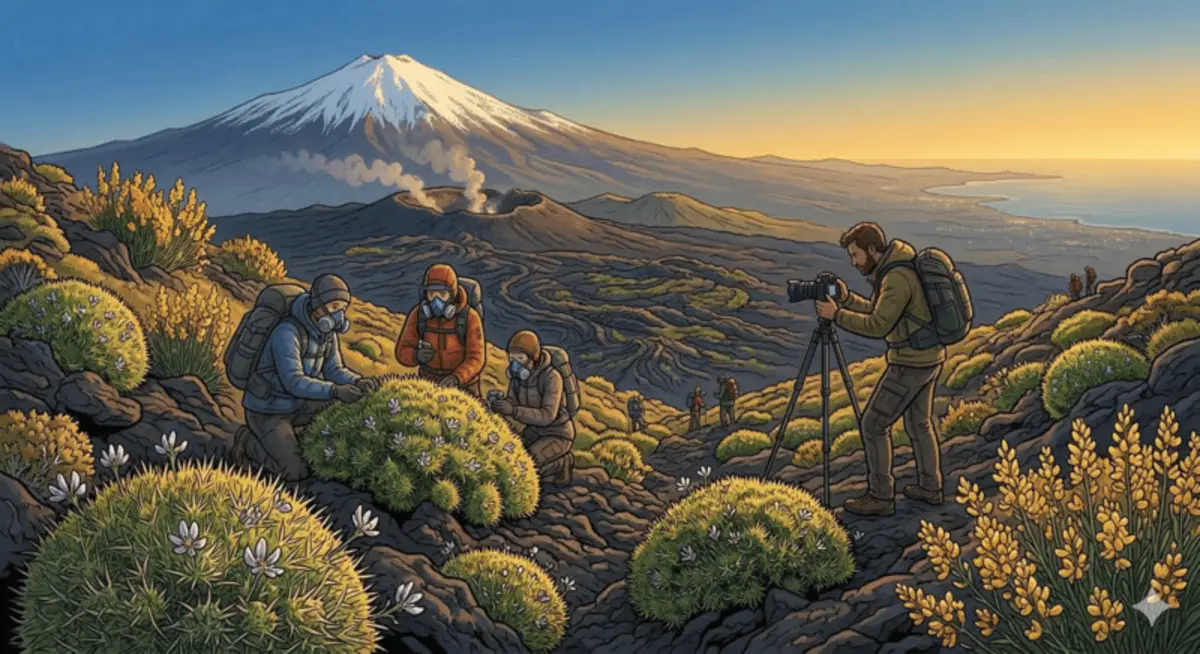
Flora and Fauna of Mount Etna: A Living Volcanic Ecosystem
Discover the surprising biodiversity of Mount Etna — from endemic plants growing on lava to rare birds and the famous Etna birch.
Table of Contents
Etna combines cultivated slopes, woodland and sparse high-altitude vegetation. Habitats change with exposure, altitude and lava substrate; a single species count does not describe what you will see on a particular walk.
Vegetation Zones: From Coast to Crater
The lower slopes include vineyards, orchards and olive groves alongside oak and chestnut woodland. Pistachio cultivation is particularly associated with the western side.
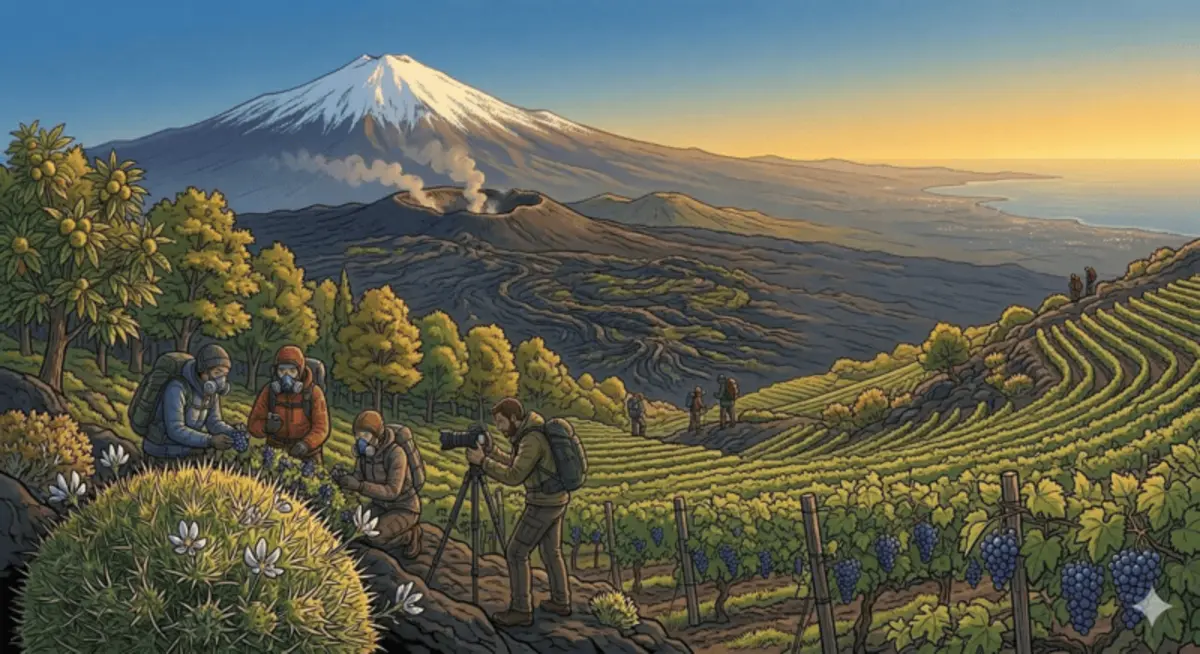
Higher up, woodland gives way to open volcanic terrain. Vegetation boundaries vary between slopes and lava flows; they are not fixed contour lines on a map.
Endemic Plants Found Nowhere Else
Astragalus siculus, the thorny cushion plant known as spino santo, characterises parts of the landscape above the woodland. Its cushions provide shelter for other plants.
The Park describes groundsel, violet and chickweed among the plants associated with these mountain habitats. Observe them without picking or trampling them.
The Etna Birch: A Survivor
Betula aetnensis, the Etna birch, is characteristic of the volcano. The Monti Sartorius area offers an opportunity to see its woodland.
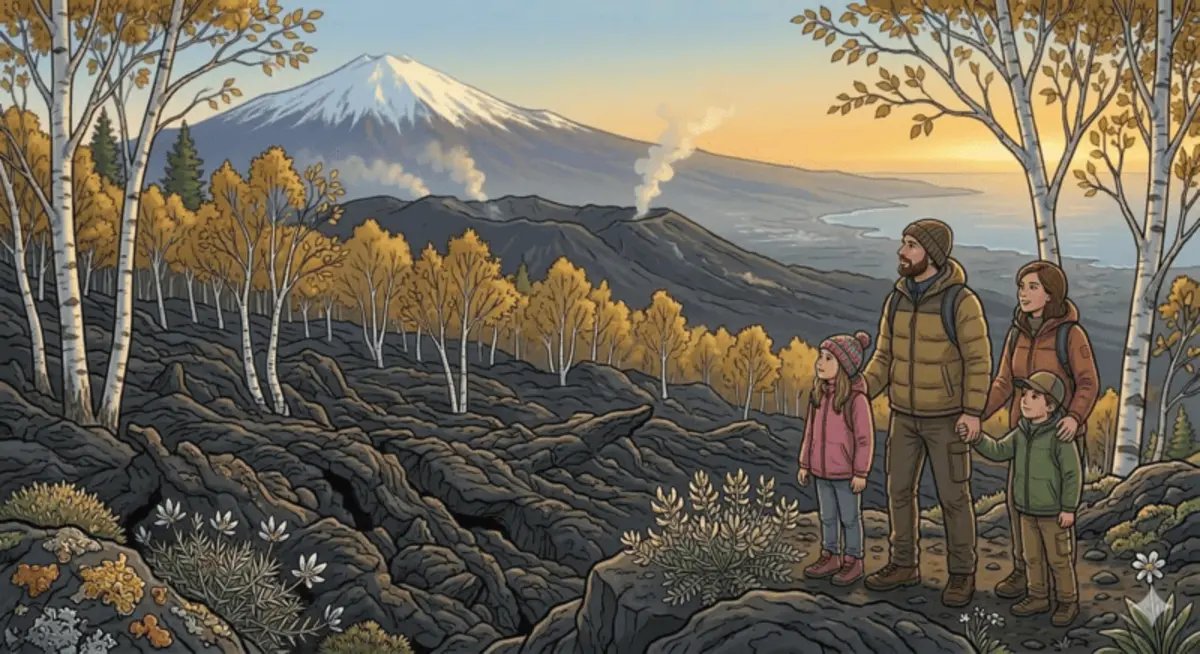
Its pale bark contrasts with the dark volcanic ground. Stay on the trail and respect any local protections around the trees.
Wildlife on the Volcano
The Park lists wildcats, foxes, porcupines and dormice among its mammals. Their presence does not guarantee a sighting during a hike.
Raptors reported by the Park include peregrine falcons, buzzards and golden eagles. Observe wildlife quietly and at a distance.
Pioneer Plants: Life on Fresh Lava
Plants recolonise volcanic terrain under different local conditions. Lava age alone cannot establish a timetable for lichens, mosses or shrubs.
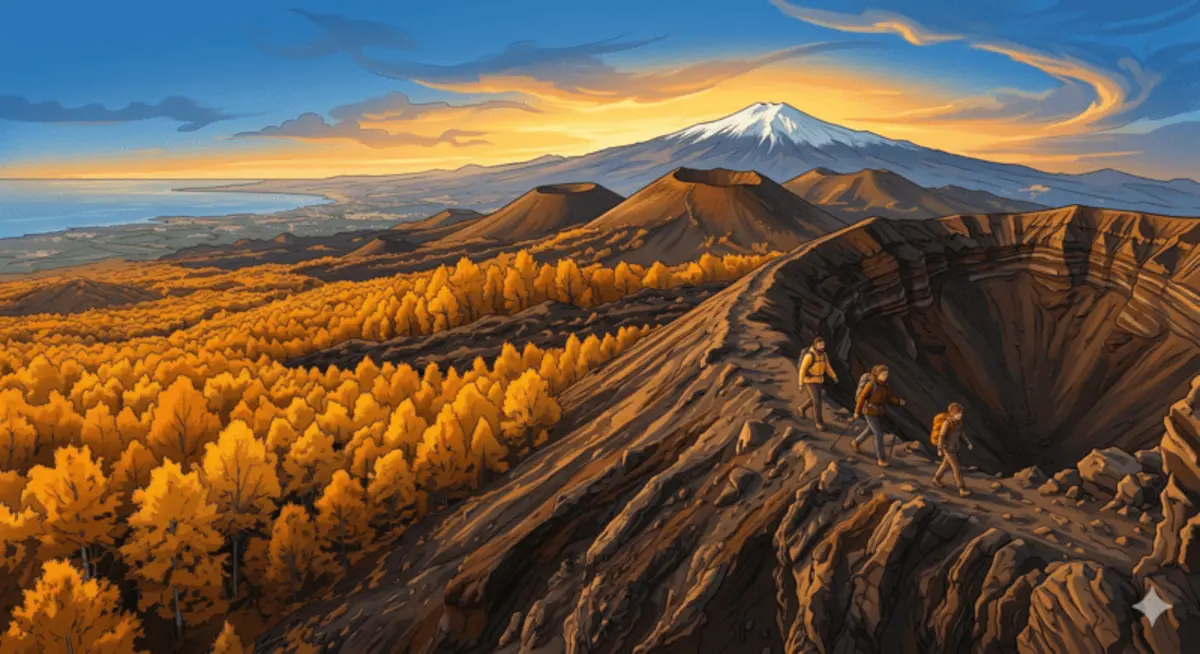
At Piano Provenzana, compare the vegetation of different lava surfaces without treating one observation as a fixed sequence for every flow. Recent eruptions can change both habitats and access.
Conservation and the Etna Park
The Parco dell’Etna protects a broader area than the UNESCO property. The World Heritage site, inscribed in 2013, covers 19,237 hectares on the upper volcano. For any hike, consult the current access restrictions; park zoning alone is not permission to enter an area.
As guides, we play a direct role in conservation. We teach visitors to stay on marked paths to avoid trampling pioneer plants, to carry out all waste, and to respect the fragile balance between volcanic destruction and biological recovery. Each eruption destroys habitat — and each recovery demonstrates nature's extraordinary resilience. Understanding this cycle is one of the most rewarding aspects of an Etna trek.
Sources
- Parco dell'Etna — protected zones, conservation regulations, and endemic species data
- UNESCO — Mount Etna World Heritage
- INGV Osservatorio Etneo — lava flow age and eruption chronology
- Collegio Regionale Guide Alpine Siciliane — guide access to Zone A summit craters
Before You Book: Quick Planning Checklist
- Check updated weather and volcanic activity conditions for your travel dates.
- Check the mountain meeting point and the departure time in the calendar. Travel independently with your rental car; no transfer is provided.
- Compare routes, practical details and availability, then use the booking calendar on your chosen tour page.
- Read local safety guidance before excursions.