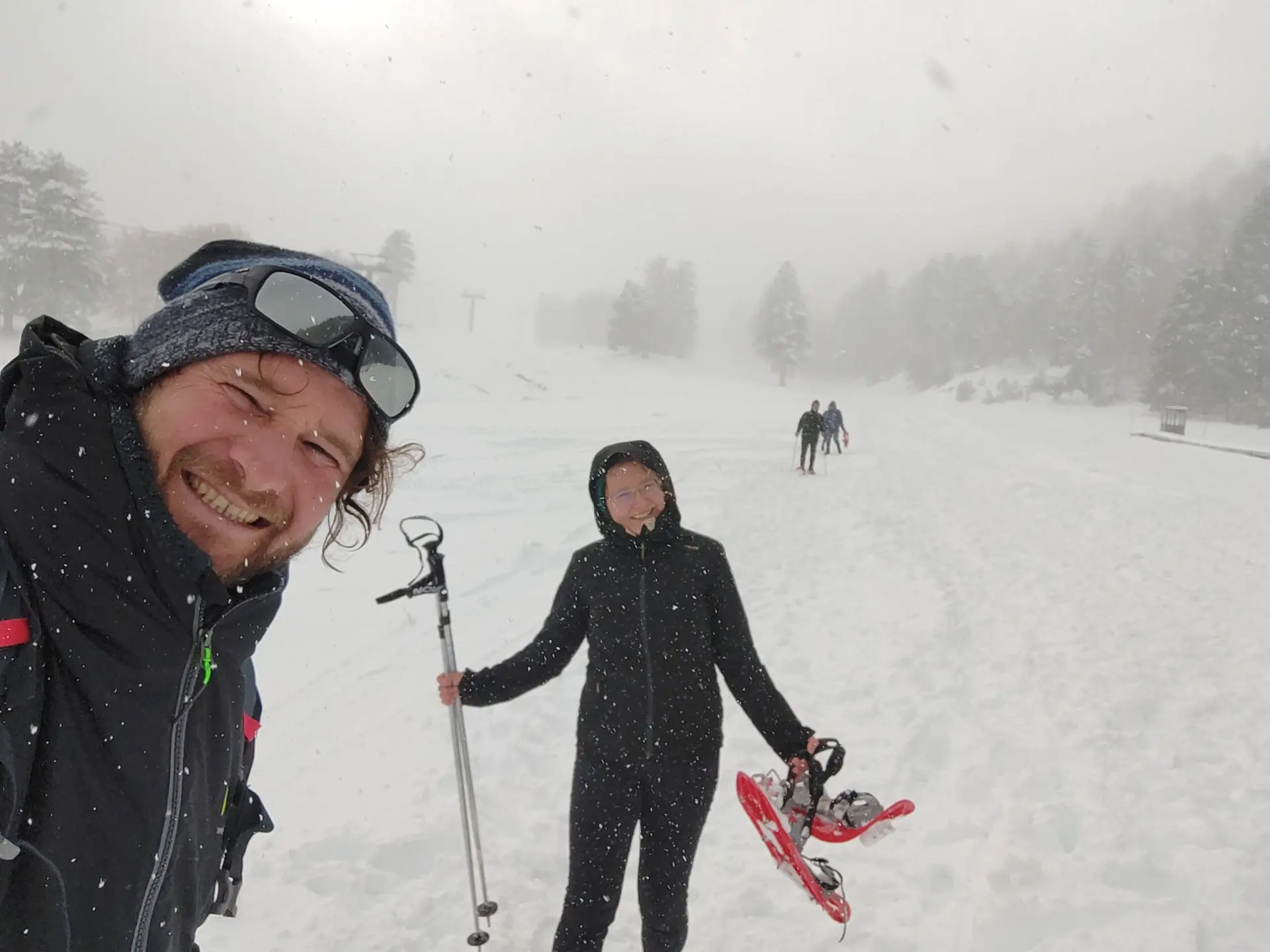
Mount Etna in winter: snow, access and trip planning
Plan a winter visit to Etna around snow, ice, mountain weather and current access. Distinguish independent winter activities from my three private excursions.
Table of Contents
A winter landscape needs a winter plan
Snow against dark volcanic rock can transform the view, but a beautiful image says little about walking conditions. Snow cover, ice, visibility and wind vary by altitude and exposure. Plan the route from current information, not from the season’s name or a photograph from a previous winter.
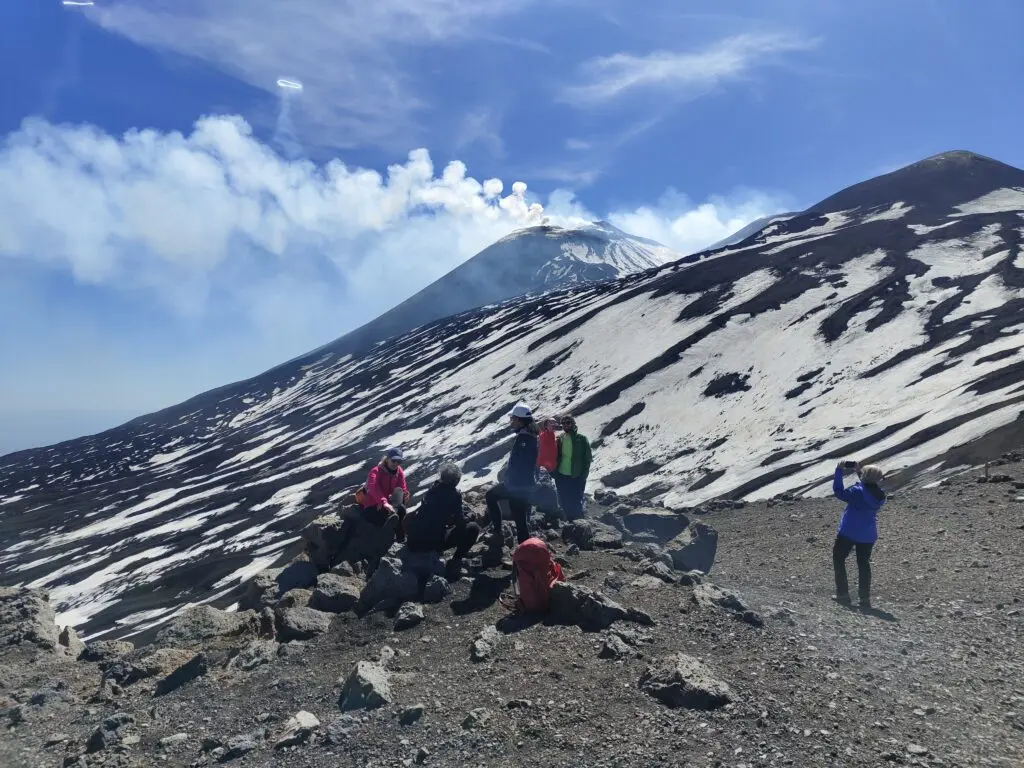
Reaching the mountain
Check the roads leading to your meeting point, any applicable winter driving requirements and the operator’s instructions before leaving. An open road does not prove that nearby trails or lifts are operating. Allow time for the journey and parking; fewer visitors on some days does not guarantee an empty mountain.
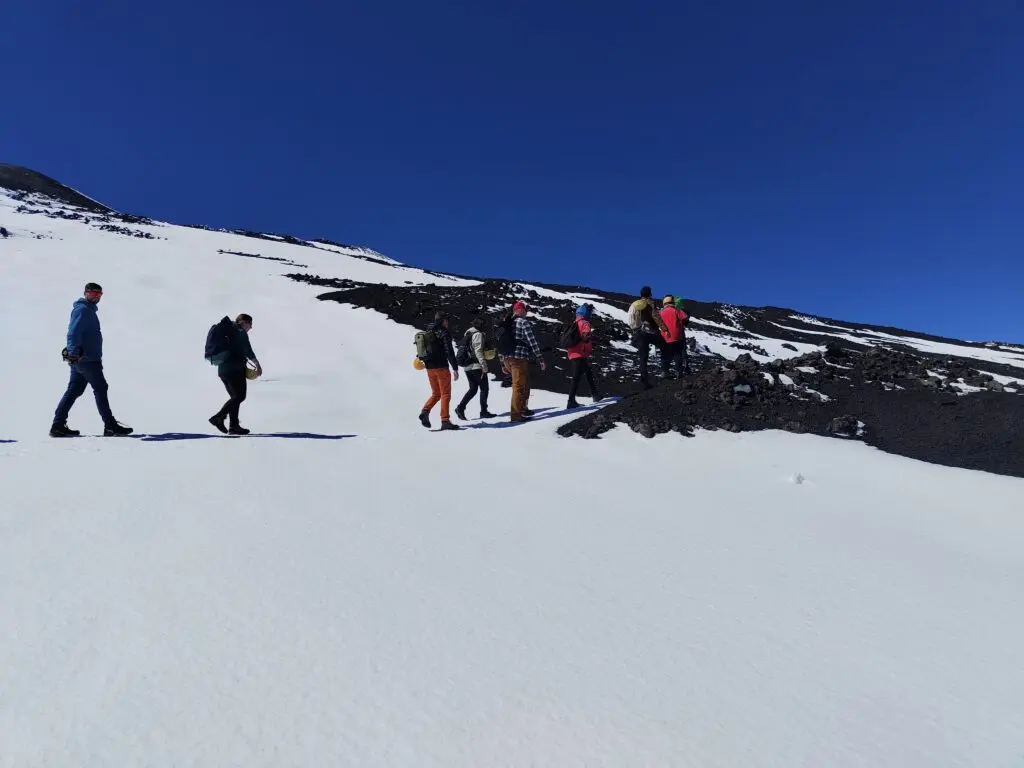
Skiing, snowshoeing and walking are different activities
For skiing, ask the relevant lift operator about current opening, snow cover and services. Snowshoeing and winter hiking require terrain-appropriate equipment and experience; neither is automatically suitable for beginners or every family. These are destination activities, not additional products in my catalogue.

Silvestri, Sartorius and higher routes
A lower route may mean less altitude exposure, but snow or ice can change its difficulty and hide the path. The usual description of Sartorius as an easy walk does not apply regardless of conditions. A summit programme must be reassessed against weather, volcanic activity and restrictions; an open cable car does not establish summit access.

Grotta del Gelo is not a casual winter detour
The name and photographs of ice do not make the cave an easy winter outing. The Park’s published route is for experienced hikers and its stated travel time concerns that specific route segment, not every approach from a car park. Consult the full route description and applicable restrictions. I do not sell cave visits or snowshoe tours, including on request.
Clothing and decisions before departure
Use the equipment list of your booked programme and clarify any winter-specific requirements with the guide. Warm layers, weather protection and grippy footwear do not by themselves make icy terrain suitable. Do not improvise around a closure or treat warm ground near volcanic features as an attraction to approach. Mountain forecasts and official restrictions take precedence over a clear webcam image.
Booking one of my three excursions
Compare the three private programmes and their actual availability. They do not include skiing, snowshoeing, night outings, cave visits or accommodation transfers. If conditions prevent the booked route, choose a practicable alternative, a new date or full refund. Guiding helps manage the outing but cannot guarantee safety or views.
Sources
Before You Book: Quick Planning Checklist
- Check updated weather and volcanic activity conditions for your travel dates.
- Check the mountain meeting point and the departure time in the calendar. Travel independently with your rental car; no transfer is provided.
- Compare routes, practical details and availability, then use the booking calendar on your chosen tour page.
- Read local safety guidance before excursions.