
Etna gas rings: how to understand volcanic vortices
Gas rings on Etna are episodic features of degassing. Read dated INGV observations, understand the vortex shape and avoid treating them as a promised tour attraction.
Table of Contents
A ring-shaped vortex, not a soap bubble
A volcanic gas ring is a toroidal vortex produced when a pulse of gas passes through a vent under suitable conditions. Its shape concerns the motion of gas and surrounding air. The visible ring is not a soap film and should not be explained as a bubble that bursts and magically keeps its outline.
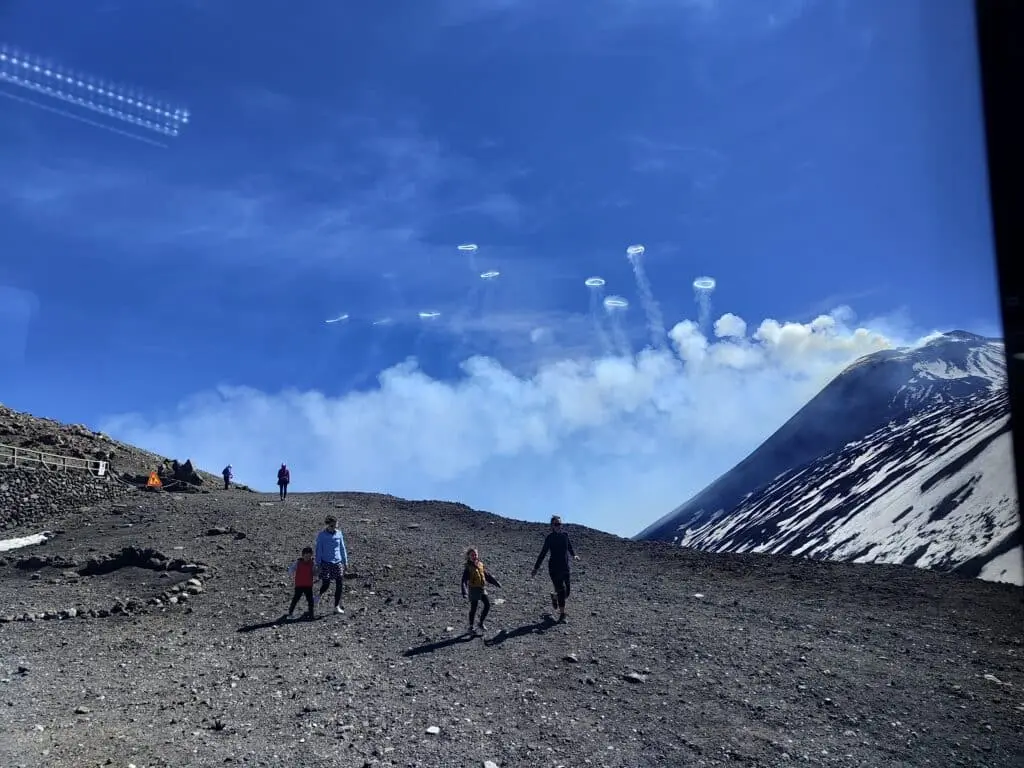
Why rings are not always present
Vent geometry and the way gas is released influence whether a coherent ring forms; wind and the viewing conditions affect how it appears and persists. A photograph records a particular event. It does not prove that the same crater will produce rings on another date or that its activity is always of one type.
What the dated observations show
INGV’s bulletin of 20 February 2024 describes volcanic vortex rings, and the monthly bulletin of 2 April 2024 describes occasional rings associated with impulsive degassing at Bocca Nuova. These are dated observations, not a statement that Bocca Nuova is permanently the most reliable place to watch them. Research on vortex acoustics also concerns other volcanoes; it is not a tourist prediction method.
A visible ring does not establish safety
The appearance of a ring alone cannot determine gas composition, concentration at a visitor’s position or permission to enter an area. Do not approach a vent for a photograph. Use official bulletins for scientific context and current restrictions for access decisions.
Seeing the landscape with a guide
My three private excursions explain different volcanic landscapes within their published routes. Rings, active lava and a particular crater view cannot be promised. Choose a programme for its walking, altitude and geological setting, and check the current conditions rather than booking around an old image.
Sources
Final planning notes
Before departure, verify local updates, weather exposure, and route suitability for your group. A guided approach remains the most reliable way to combine safety, learning value, and realistic timing on Mount Etna.
Before You Book: Quick Planning Checklist
- Check updated weather and volcanic activity conditions for your travel dates.
- Check the mountain meeting point and the departure time in the calendar. Travel independently with your rental car; no transfer is provided.
- Compare routes, practical details and availability, then use the booking calendar on your chosen tour page.
- Read local safety guidance before excursions.