Mount Etna 2002 Eruption: A Spectacular Show of Nature
Mount Etna, the largest and most active volcano in Europe, is located on the east coast of Sicily, Italy. It is a UNESCO World Heritage Site and a popular...
Mount Etna, the largest and most active volcano in Europe, is located on the east coast of Sicily, Italy. It is a UNESCO World Heritage Site and a popular destination for tourists and adventurers who want to experience the thrill of trekking on an active volcano.
But what makes Mount Etna so fascinating and unpredictable is its frequent and sometimes violent eruptions, which have shaped its landscape and history for thousands of years.
The INGV DANTE catalogue separates the 2002–2003 eruption into distinct phases. The north-eastern activity ran from 27 October to 4 November 2002; the southern phase ran from 27 October 2002 to 28 January 2003. These dates should not be treated as three months of uninterrupted activity at the northern craters.
Lava effusion and explosive activity were both part of this eruptive crisis. The northern flows affected the tourist infrastructure at Piano Provenzana, while the southern activity had its own vents and development. For chronology and measurements, consult the DANTE historical eruption catalogue.
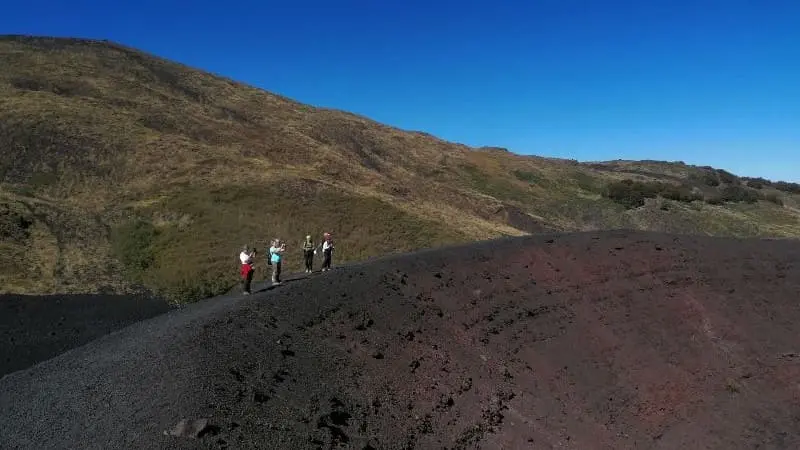
The landscape is evidence of an event with consequences for people and infrastructure, not simply a spectacle. Compare the newer lava and crater forms with older surfaces and surviving woodland. Historical damage does not establish which ruins are visible or accessible today.
The 2002 Craters excursion is no longer offered. This article retains its landscape and geological information. See the current private excursions for available programmes.
To book your excursion, visit my website or contact me directly. I look forward to sharing my knowledge of Mount Etna and its extraordinary volcanic history with you.
Final planning notes
Before departure, verify local updates, weather exposure, and route suitability for your group. A guided approach remains the most reliable way to combine safety, learning value, and realistic timing on Mount Etna.
Before You Book: Quick Planning Checklist
- Check updated weather and volcanic activity conditions for your travel dates.
- Check the mountain meeting point and the departure time in the calendar. Travel independently with your rental car; no transfer is provided.
- Compare routes, practical details and availability, then use the booking calendar on your chosen tour page.
- Read local safety guidance before excursions.