Getting to Etna from Catania: My Local Guide
Bus, rental car, private transfer or guided climb — how I tell my guests to get up the mountain, depending on how high they want to go.

So, how do you actually get up here from Catania?
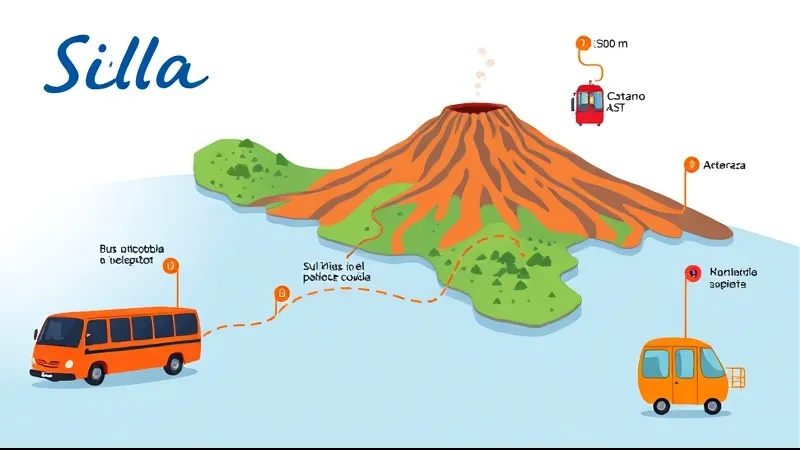
I get this question at the start of almost every excursion, usually from someone who's just landed and is already looking up at the mountain from their hotel balcony. There are four ways to do it: drive yourself, catch the AST public bus, book a private transfer, or come up with me or another guide on an organised tour. Whichever you pick, you'll land at one of two doors onto the volcano — Rifugio Sapienza on the south side (1,900 m, where the cable car starts) or Piano Provenzana on the north side (around 1,800 m). Most visitors, and the bus, go south.
My honest, no-nonsense answer: no car and watching your budget, take the AST bus. Want to come and go on your own schedule, rent a car. Travelling as a group, book a transfer. Want to actually stand near the summit craters, you'll need a guided tour — because past 2,500 m, where the top rises to roughly 3,400 m, the law requires an authorised guide. It isn't a suggestion I make to be cautious; it's the rule up there, full stop.
Below I'll walk you through each option the way I'd explain it if we were sitting at a café in Nicolosi before heading up.
The mountain's two front doors
Etna has two places where visitors actually arrive, and from Catania you'll almost always be pointed toward the first. Rifugio Sapienza (1,900 m) on the south side is where the Funivia dell'Etna cable car begins, and it's where I meet most of my groups — good road, parking right at the base, everything built around getting people up the mountain efficiently.
Piano Provenzana, on the north side above the woods of Linguaglossa, is a different world. The 2002 eruption tore through the old tourist station and the pine forest around it, and what you walk through today is a mix of raw, dark lava fields and facilities that were rebuilt afterward. I like bringing people here precisely because it's quieter — but it's genuinely hard to reach without your own car, which is the main reason the buses and most day tours from Catania never go this way.
Both sides sit inside the protected area run by the Ente Parco dell'Etna, and I always tell guests to check the park's website beforehand for trail and access conditions before committing to a side.
Is there really only one bus a day?
Yes, and I warn every budget-conscious guest about this specifically. The AST bus leaves Catania from Piazza Papa Giovanni XXIII, right outside the central station, and climbs straight to Rifugio Sapienza (1,900 m). One departure up in the morning, one return down in the afternoon. That's it.
It's cheap — a round trip runs around 6–7 € — but the single timetable rules your entire day. You'll arrive mid-morning and need to be back at the stop for the one afternoon departure, no exceptions, no evening service. I've had guests miss it because they lingered over a coffee at the rifugio; there's no second chance that day. If sunrise or sunset on the mountain is what you're after, the bus simply won't get you there.
Fares and times shift with the season, so I always tell people to check the official AST (Azienda Siciliana Trasporti) site the night before, not the day of.
Should you just rent a car?
For most independent travellers, honestly, yes. It's the only option that reaches both gateways — Sapienza and Piano Provenzana — with parking at each. The climb up the south side follows the SP92, a steady, well-paved series of bends from Nicolosi through old lava flows; nothing technical about it.
What a car really buys you is time. The bus locks you into a mid-morning window; with your own car you can be up there before the crowds arrive, when the air is still cold and clear, or you can stay for the last light of the day — the parts of the visit the bus simply cuts out of your itinerary. The road itself is nothing special to drive, though I always check conditions before recommending it in winter, since snow and occasional ash can close sections without much notice.
If you're combining the mountain with a slower day around Nicolosi, Zafferana Etnea or one of the wineries on the lower slopes, having the car turns a single trip up and down into a proper day out.
Do you actually need a guide, or can you go it alone?
Depends entirely on how high you want to go. Around 1,900–2,000 m, you're on your own terms — go, look around, come back down. But the moment you cross 2,500 m, heading into the summit crater zone, an authorised guide becomes mandatory by law. That's not me being protective of my work; it's because the upper mountain is active ground — loose, shifting terrain, weather that turns in minutes, and gas venting where you least expect it.
A guided day takes the hardest parts off your plate: transfer from Catania, the right equipment, and someone reading the mountain in real time. Going solo saves money and gives you freedom below the line — but the line is fixed. Above it, the decision isn't really yours to make anymore.
This is the terrain I know best as a certified Volcanological Guide. On the loose scoria above the cable car's top station, the ground doesn't really crunch under your boots — it shifts, each step sinking and sliding you half a pace back down. Near the active vents there's a warm, faintly metallic sulfur smell that catches at the back of your throat, stronger some days than others depending on which way the wind's blowing. I usually pause groups behind the low ridges of the older cones before the final stretch, out of the wind, because those exposed sections can turn cold and gusty even when it was warm at the base. None of that shows up from the car park — it's what the guided section of the day actually adds. In Sicily this profession is regulated through the Guide Alpine e Vulcanologiche della Sicilia.
Landing at the airport — can you head straight up?
You can get close. Catania–Fontanarossa (CTA) is eastern Sicily's main airport, and from there you've got three routes toward the volcano: a direct private transfer to Rifugio Sapienza, an airport car rental and drive up the SP92 yourself, or a shuttle into the city centre to connect with the single AST bus from Piazza Papa Giovanni XXIII.
There's no scheduled bus running straight from the terminal onto the mountain — the public route always funnels through the city first. That makes the timing tight if you're relying on that one morning AST departure: land, get into town, catch the bus, all within a narrow window. If your schedule isn't that flexible, or you're landing in the afternoon, I generally point people toward a transfer or an airport rental instead. Check current shuttle and transfer timetables on the official Catania airport site before you fly.
How far up does the cable car actually take you?
The Funivia dell'Etna runs from Rifugio Sapienza (1,900 m) up to a top station at roughly 2,500 m. From there, guided 4x4 vehicles carry on to about 2,900 m — the highest point any organised transport reaches. Past that, it's on foot toward the summit craters at around 3,400 m, and only with an authorised guide.
On price: the cable car round trip is 54 €. Add the 4x4 leg up to ~2,900 m and the combined round trip is 82 €. Those figures cover transport only — any guiding fee for the summit area is separate. I always tell guests to confirm the current tariff on the official Funivia dell'Etna site, since prices and hours move with the season and with what the volcano is doing.
How I'd help you choose
It comes down to your budget, your group, and how high you actually want to go. Here's the version I give people in person.
- AST public bus — no car, watching costs, fine with one fixed schedule. Goes only to Rifugio Sapienza (1,900 m), morning up, afternoon down.
- Rental car — families or anyone who wants control over timing. Reaches both Sapienza and Piano Provenzana, parking at each, and covers the early and late hours the bus misses entirely.
- Guided tour — going above 2,500 m, no way around it. This is also simply the safest, most informed way to experience the upper mountain.
- Private transfer — groups who want a direct ride from Catania or the airport to the base, no driving involved.
My rule of thumb: if the summit is the goal, don't overthink the transport — you'll need a guide regardless, so just pick whatever gets you comfortably to the base. If you're staying in the 1,900–2,500 m band, choose on cost and how much flexibility you want.
What I tell every guest before we go up
Two things matter more than anything else: dress in layers, and check the mountain's mood before you commit to a day. Even in August it can be genuinely cold and windy at 2,500–2,900 m — often ten-plus degrees colder than down in Catania — so bring a warm layer no matter what the city thermometer is telling you.
- Layers: a base layer, something warm on top of that, and a windproof shell. What it feels like at the base tells you almost nothing about the exposed upper slopes.
- Real shoes: closed trekking shoes with actual grip. The scoria is loose and abrasive — sandals or smooth soles will slide right out from under you.
- Sun protection: the light at altitude is strong and the dark ground throws heat back at you — sunglasses and sunscreen aren't optional in my book.
- Check the volcano first: Etna is active, and access to the upper slopes can change on short notice. I always read the official INGV – Osservatorio Etneo bulletin before planning a day.
- Confirm the timetables: both the AST bus and the cable car shift hours with the season and can pause for bad weather or increased activity. I verify both, every time, before relying on them.
Cover these five and you'll avoid almost every bad surprise I've seen catch visitors out on the mountain.
Questions I get asked all the time
Is there really just one bus a day?
Yes. One AST departure up from Catania in the morning, one back down in the afternoon. No second run, nothing in the evening — your whole day gets built around that single timetable.
What altitude is Rifugio Sapienza?
1,900 m, on the south side, at the base of the cable car. It's where the AST bus ends up and where most tours from Catania, including mine, begin.
Do you really need a guide for the summit craters?
Yes, no exceptions. Above 2,500 m — the summit crater area sits around 3,400 m — an authorised guide is required by regulation. It's a legal requirement, not something guides say to drum up business.
Can you come up in winter?
You can, but everything changes: snow, ice, shorter cable car hours, and sometimes restricted access up top. Winter needs proper gear, and for the higher zones, a guide is still non-negotiable.
Is the cable car always running?
No. Strong wind, snow or increased volcanic activity can close it, and hours change with the season. I always check the official Funivia dell'Etna site before telling anyone to count on it.
North side or south side, coming from Catania?
South side — Rifugio Sapienza — is the practical default: better transport links, and the cable car is right there. Piano Provenzana on the north is quieter, but you'll really want your own car to get to it.
What about the Circumetnea railway?
The Ferrovia Circumetnea is a narrow-gauge line that loops around the base of the volcano through the towns nearby — a good way to see the lower slopes, but it doesn't climb anywhere near the craters.
Is it actually dangerous up there?
Etna is an active volcano, and the way I see it, the risk is managed, not avoided: a certified guide is required on the upper slopes, INGV monitors activity continuously, and access gets restricted when conditions call for it. Go with proper guidance, check the bulletin first, and you're operating well within safe, regulated limits.
Let's plan your route up
Once you know whether you're aiming for the base or the summit zone, it's really just a question of which side, which season, and how high you can comfortably manage. If you want help matching the route and the altitude to your own fitness and schedule — especially for the guided stretch above 2,500 m — write to me and we'll work out the details before you book any transport.
Sources and official references
- INGV – Osservatorio Etneo — volcanic activity monitoring and bulletins
- Ente Parco dell'Etna — protected area, access and trails
- UNESCO World Heritage — Mount Etna (inscribed 2013)
- AST – Azienda Siciliana Trasporti — public bus timetables and fares
- Funivia dell'Etna — cable car tariffs and altitudes
- Catania–Fontanarossa Airport (CTA) — transfers and connections
- Ferrovia Circumetnea — narrow-gauge railway around the volcano
- Guide Alpine e Vulcanologiche della Sicilia — licensed guiding authority
Before You Book: Quick Planning Checklist
- Check updated weather and volcanic activity conditions for your travel dates.
- Confirm meeting point, start time, and transfer arrangements.
- Request availability early for your preferred date and route.
- Read local safety guidance before excursions.