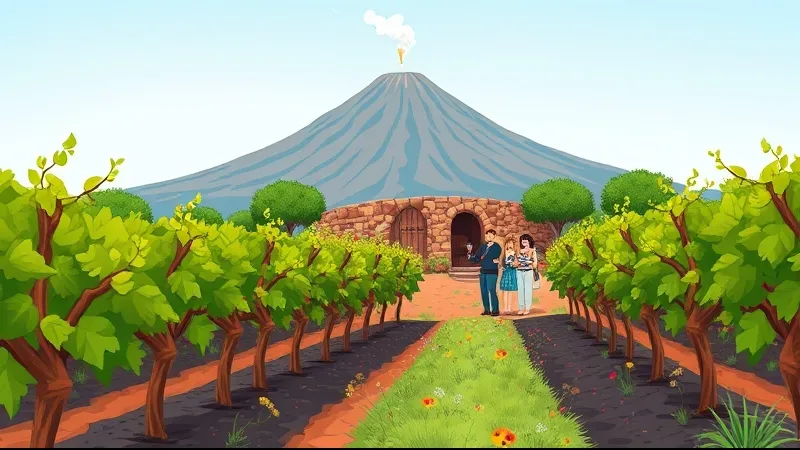
Spring on Etna: A Volcanological Guide’s Wine Notes
My personal guide to tasting volcanic wines among century-old vines — where lava meets the glass
Snowshoeing, night excursions, cave visits and wine tastings are past offers and are not currently bookable, including on request. This article remains as destination information. Choose one of my three private excursions: Summit Craters, Cable Car & 4x4, Monti Sartorius.
Spring in the vineyards
The vineyards offer a different perspective on Etna’s lower slopes: terraced plots, old stone buildings and changing spring growth. Visit arrangements depend on each estate. A winery visit and a mountain excursion are separate activities, each with its own timing and conditions.
Spring conditions vary with altitude and the weather. Confirm outdoor access and indoor alternatives with the winery; neither mild temperatures nor an indoor tasting is guaranteed by the season.
Etna DOC and its grapes
The Etna DOC was recognised in 1968. Its production specification defines the eligible territory and grape composition; descriptions of a wine region do not establish the origin or composition of every bottle.
Nerello Mascalese and Nerello Cappuccio are associated with Etna’s red wines; Carricante is central to its whites. The production specification sets the permitted blends and gives Etna Bianco Superiore a specific production area in Milo. These grapes are not all exclusive to the volcano. Etna DOC.
Contrade and origin
The contrade identify areas of Etna's wine territory. The Etna DOC production specification lists them and regulates geographical mentions. A name on a label helps identify origin; it does not by itself guarantee a single-vineyard wine.
Volcanic soil and tasting
Volcanic soil is part of the growing environment. A tasting description such as “mineral” is not a chemical analysis, nor proof that particular rock minerals pass directly into the glass. Compare documented information for the specific vineyard and wine.
Ungrafted vines
Etna has vineyards with ungrafted vines growing on their own roots. This does not mean that the whole area escaped phylloxera. Vine age, training system and history should be documented for the specific vineyard: ask the winery which plots you are seeing during a visit. Cavanera — Vigneto pre-fillossera.
When the vines grow
Budbreak and harvest dates depend on variety, exposure and the weather of the year as well as altitude. Ask the producer about the stage reached by the vineyard you intend to visit; a fixed delay between two elevations is not a reliable calendar.
Planning a winery visit
Wine visits are destination information here, not a service currently bookable with me. Arrange any winery visit directly with its operator. My three private volcanic excursions follow the departure times shown in the booking calendar.
Ask whether the visit includes the vineyard, cellar and tasting, and who accompanies it. Confirm dietary requirements and options for non-drinkers with the winery. Arrange independent travel, allowing enough time for mountain roads; a tasting does not imply a transfer service.
Prices and what is included
Check the winery’s current offer for the price per person, number of wines, food, duration and cancellation conditions. Bottle prices depend on producer, label and vintage; this article does not provide a current price list.
The Etna DOC Consortium presents its member wineries. Check availability, wines and prices directly with the winery when planning a visit; producer numbers and programmes can change.
Before You Book: Quick Planning Checklist
- Check updated weather and volcanic activity conditions for your travel dates.
- Check the mountain meeting point and the departure time in the calendar. Travel independently with your rental car; no transfer is provided.
- Compare routes, practical details and availability, then use the booking calendar on your chosen tour page.
- Read local safety guidance before excursions.